




Every chemical plant is laser-focused on continuous operations. With margins already constrained, every minute the plant is not operating affects the bottom line.
Yet one of the biggest drivers of operational continuity does not actually sit within operations at all. It resides with the plant’s emissions measurement strategy.
Air monitoring methods are usually selected through a narrow environmental lens, namely regulatory compliance and permitted compounds of interest. But the method you choose, and the data it provides, can also help teams investigate problems earlier, target maintenance more precisely, avoid unnecessary process disruptions, and make better decisions about uptime, efficiency and cost.
These factors combine to make air emissions just as much an operational concern as an environmental one.
Different methods answer different operational questions
Not every method is designed to answer the same question.
Periodic testing can provide a detailed snapshot of performance at a specific point in time. Continuous and near-real-time methods can show how emissions shift as process conditions change. Some methods are highly targeted, while others can measure a broader range of compounds at once.
No approach is inherently “the best.”
What should distinguish one technology from another is the information the facility needs to make the next operational decision.
If the goal is to maintain visibility while permanent monitoring is offline, or to understand how process adjustments affect emissions, continuity of measurement matters most. If the team is troubleshooting an unexpected change in emissions, speed-to-data may be the objective.
In reality, all of these considerations can and should be a priority. The aim is to look beyond compliance to a specific requirement as the end goal and ask a more useful question: Will the right people have the right information early enough to make proactive adjustments that protect operational continuity?
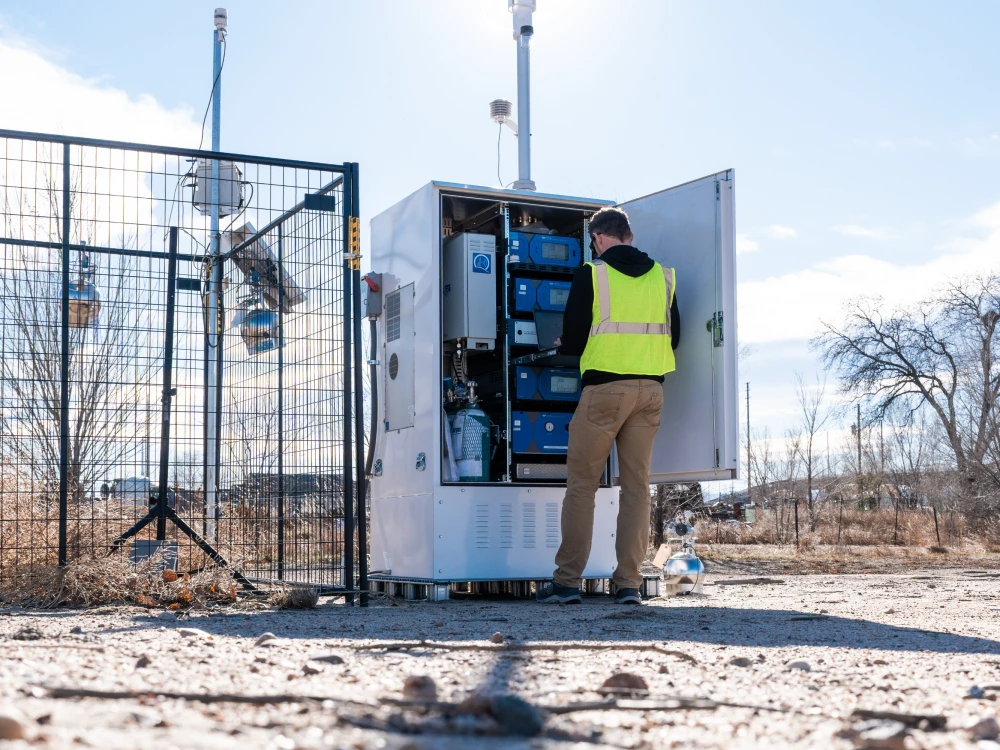
Two techniques demonstrate how this approach can work in practice: Temporary Continuous Emissions Monitoring Systems (CEMS) and Fourier Transform Infrared Spectroscopy (FTIR).
Temp CEMS protect operational continuity
Permanent CEMS provide valuable trend data and are required through some permits or regulations. But maintenance, upgrades, unexpected outages or certification delays can lead to a choice between compliance and sustained operations.
Temporary CEMS, on the other hand, can be deployed in a pinch to ensure both operations and environmental teams maintain visibility during these critical periods.
The bigger opportunity is planning for those periods before they happen. Routine maintenance, startup and shutdown activity can be mapped alongside equipment performance and emissions data to give teams a clearer view of how the site is running, where conditions are changing and what action may be needed.
FTIR shortens the feedback loop during process changes
When a facility is tuning a process, adjusting controls or troubleshooting a performance issue, waiting on standard test results slows down decision-making.
FTIR can provide near-real-time information across multiple compounds while those adjustments are being made. Even if the process is changing.
By layering in this technology, environmental and operations teams can access a tighter feedback loop. These teams can make a change, observe how the emissions stream responds, and use that information to decide whether the process is moving in the right direction or requires further adjustment. Furthermore, they can make critical decisions towards improving processes that may positively impact production.
This streamlined process allows teams to make adjustments in the moment, reducing the need for repeat testing deployments and making environmental data more useful as an early operational indicator.
Emissions measurement is an operational decision
Emissions monitoring will always remain an environmental focus, with a strong emphasis on compliance. But ignoring the operational implications can be costly at a time when every second of operational downtime is felt.
The right measurement strategy can help teams maintain visibility through planned and unplanned events, shorten the feedback loop during process changes and give environmental and operations teams better information to protect uptime, efficiency and cost.
Facilitating this level of collaboration is where the real value comes from. The end goal is not about deploying more technology, it’s about making sure the methods you use provide the information the plant needs when the decision has to be made. That is where real operational assurance comes from.
Determining the right measurement approach hinges on the decisions your facility needs to make. Onterris can help you evaluate how well your existing monitoring technologies, data and response protocols work together to protect uptime.
Talk With an Air Quality Expert Today


