Who We Are
Onterris is a global environmental solutions company partnering with organizations to solve complex challenges where environmental pressures, regulatory expectations and operational risks intersect.
Sectors
Access deep environmental expertise tailored to your industry, with solutions built for real-world conditions.
Solutions
Prepare for escalating environmental risks with expert solutions designed to perform under pressure.
Our Thinking
Explore briefs, perspectives and articles that turn insight into action. Discover thought leadership that informs decisions and drives impact. See the ideas shaping environmental solutions and guiding your next move.
Cuture & Careers
Where brilliant people come together to turn environmental science into real-world progress for communities, industry and the planet.

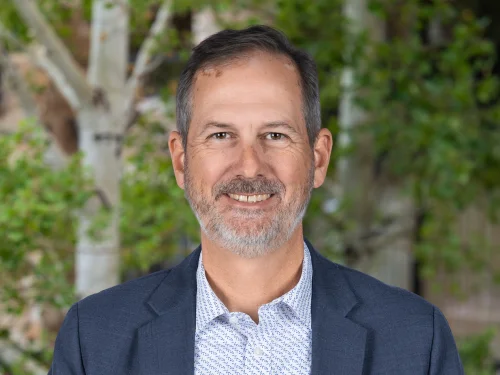
John Kind, PhD, CIH, CSP

Principal Toxicologist

About Dr. Kind

Dr. John Kind is a Toxicologist and Certified Industrial Hygienist (CIH) with more than 25 years of experience helping clients with issues regarding worker health and safety, evaluate chemical exposures, understand potential health effects from environmental and workplace exposures and address complex questions of disease causation. His expertise spans human health toxicology and risk assessment, exposure assessment and dose reconstruction and industrial hygiene; and he serves as an expert witness in toxic tort litigation involving chemical exposures and environmental hazards.

At Onterris, Dr. Kind applies this expertise to human health and toxicology projects as well as chemical emergency response. As a former member of the Onterris Toxicology Emergency Response Program (TERP), he has led air monitoring and environmental sampling teams following hazardous materials incidents across the United States, providing critical exposure data to support decisions that protect workers and surrounding communities. His emergency response experience includes chemical releases involving fixed facilities, transportation, oil and gas exploration and production and landfills.

Dr. Kind earned a Bachelor of Science (B.S.) in Biochemistry-Toxicology from Murray State University and a Doctor of Philosophy (Ph.D.) in Interdisciplinary Toxicology from the University of Georgia.

Dr. Kind is an active participant in professional organizations and technical committees related to toxicology, industrial hygiene and emergency response. He serves on the American Industrial Hygiene Association’s Emergency Response Planning Guideline (ERPG) Committee which establishes short-term exposure guidelines for communities impacted by emergency chemical exposures.


Featured publications

  • Wnek, S. M., Kuhlman, C. L., Harrill, J. A., Nony, P. A., Millner, G. C. and Kind, J. A. ‘Chapter 5 - Forensic Aspects of Airborne Constituents Following Releases of Crude Oil Into the Environment A2 - Stout, Scott A’, in Wang, Z. (ed.) Oil Spill Environmental Forensics Case Studies: ButterworthHeinemann, 2018; pp. 87-115.
  • Kind, J.A. and Keller, R. (2019). Chapter 3 – Principles of Toxicology in Toxicology Principles for the Industrial Hygienist 2nd Edition. AIHA Press.
  • Tuttle, K. Kind, J.A., Nony, P., and Still, K. (2019). Chapter 27 – Asbestos in Toxicology Principles for the Industrial Hygienist 2nd Edition. AIHA Press.
  • Hussey, M.R., Kornberg, T.G., Sherrick, J.M., Olson, A.M., Kind, J.A., & Perez, A.L. (2025). The relationship between PFAS exposure and dyslipidemia: an updated review, meta-analysis, and evaluation of bias. Eur J Epidemiol, 40(9), 995-1029.

Related Content

Why Smarter Remediation Starts with Understanding Risk

Understanding actual site risks helps environmental professionals make smarter cleanup decisions, focus resources where they matter most and deliver lasting protection

Can You Trust the Environmental Data Behind Your Next Decision?

Eight questions for chemical and industrial environmental compliance leaders to pressure-test environmental data evidence before the next reporting, permitting or planning decision

What Makes an Effective Industrial Hygiene Program?

From identifying workplace hazards to verifying controls, a structured industrial hygiene program helps facilities prioritize risks and make informed safety decisions

From Data Centers to Global LNG Markets: The Growing Role of Certified Natural Gas

As buyers seek greater emissions transparency, verified methane performance is becoming a commercial consideration for natural gas suppliers and an increasingly important factor in the future of energy markets

Turning Methane Data into Better Operational and Business Decisions

Using defensible methane data to prioritize action, improve performance and demonstrate value

How to Build a Measurement Strategy that Withstands Regulatory Evolution

A framework for chemical manufacturers to assess environmental monitoring technologies based on the decisions they support, risks they reduce and value they create

Rethinking Emissions Monitoring as a Tool for Operational Assurance

Temp CEMS and FTIR: A practical example of how chemical manufacturers can turn emissions data into faster, more informed decisions.

Canada’s Federal VOC Regulations: What Facility Operators Need to Prioritize

Federal VOC Regulations Phase 2 focus on emissions from petroleum liquid storage tanks and loading racks, with phased requirements now in effect for affected facilities.

California SB 1137: Why Early Planning is Crucial for Oil and Gas Operators

Learn how California oil and gas operators can prepare for SB 1137 with early sampling, air dispersion modeling, EDS planning and a defensible LDRP.

Your Bottling Plant Measures Almost Everything. Why Not CO2 Loss?

Tracking carbon dioxide (CO₂) loss helps plants reduce emissions, prioritize repairs and protect margins