


The water decision behind responsible minerals development
Critical mineral supply chains face well-known challenges: too few mines, limited processing capacity and long project lead times to permit and develop operations. Less attention is given to the water systems that determine whether a new project can advance. A project can have the right geology, strong demand and supportive policy, yet still stall without a water strategy that is resilient, economically viable and socially acceptable.
This is partly to do with geology. Many critical mineral deposits are found in regions where readily available water is limited, highly variable or already under pressure.
This can create direct and indirect impacts for other water users, which is why regulators require rigorous scientific studies to understand baseline conditions, assess potential impacts and define which impacts can be avoided, mitigated or accepted under regulatory conditions.
Historical impacts to water supplies from mining projects in some jurisdictions have also created skepticism about the ability of mining companies to responsibly manage this vital resource. Even when projects present rigorous scientific assessments, they can still face delay when communities have concerns about perceived or real impacts to water security.
Water supply is often one of the first practical tests of whether a minerals project can move from discovery to responsible production. The mining sector has matured significantly in its approach to sustainable water management, but successful projects still need to show how water will be sourced, protected and monitored through planning, operations and closure. Done well, a water strategy can help meet critical mineral supply demands while strengthening regulatory confidence, social licence and long-term water stewardship.
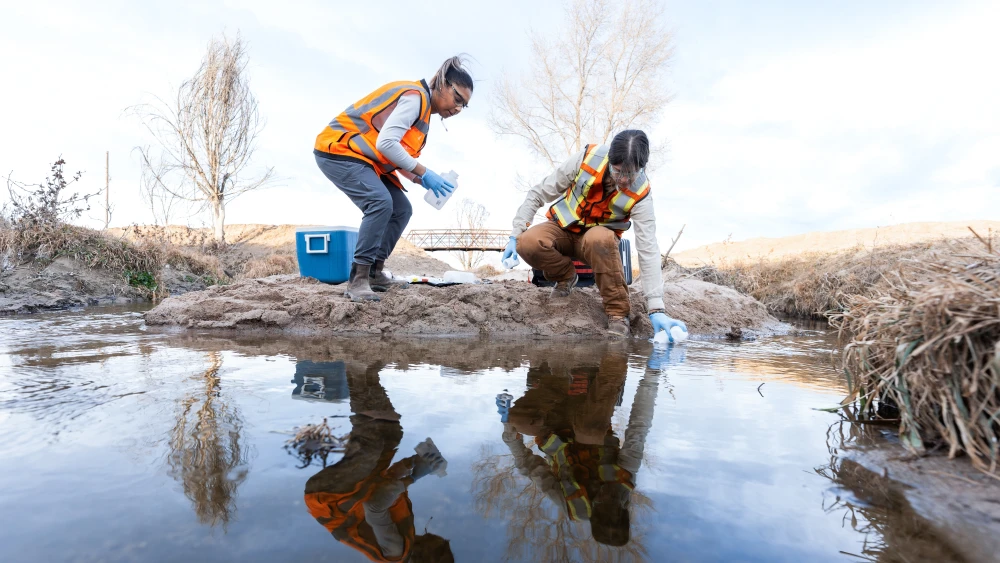
Water stewardship starts before mine plans are solidified
Water stewardship begins when a project is still in the flexible planning, design and investment-decision stages.
Exploration and early study phases often focus on resource definition, metallurgy, infrastructure and capital planning. Water can be treated as a later permitting requirement, but that timing creates risk. By the time feasibility work begins, source options may have narrowed, technical assumptions may be embedded in the mine plan and community concerns may have already formed around perceived or real impacts.
A stewardship-based approach brings water into the earliest project decisions. It asks how much water the project would require under different production rates, processing options and mine schedules. It identifies which sources are physically available, legally accessible and socially acceptable. It also evaluates whether those sources could affect other water users, groundwater-dependent ecosystems, cultural values or long-term regional water security.
A source that appears inexpensive may carry high permitting or social risk. A source that requires more infrastructure, such as treated wastewater, brackish groundwater, managed aquifer recharge, recycled process water or desalinated supply in coastal settings, may produce a more durable project if it reduces pressure on freshwater systems.
Water is also connected to tailings strategy, process design and closure planning. Thickened tailings, filtered tailings, recycling circuits, water treatment and alternative source portfolios can reduce freshwater demand, but they also affect energy use, cost, land disturbance, operational complexity and post-closure obligations. The right answer is site-specific. The best time to compare those trade-offs is before the project has committed to a single pathway.

Not all water sources are created equal
A water source’s value is not the same for all users. Its suitability depends on its quality, location, existing demand and ecological or cultural significance.
Some sources are essential for community drinking water, agriculture, livestock or ecosystems. Others are lower quality, farther from existing users or suitable for industrial use after treatment.
Across North America and Australia, the mining industry is already applying this thinking in several practical ways.
Many mines reduce freshwater demand by recycling process water. Operators recover water from tailings thickeners, seepage collection systems, processing circuits and site wastewater treatment plants, for reuse in mineral processing, dust suppression and other site activities. At established operations, these systems can allow reused water to meet a substantial share of site demand, rather than through new abstraction.
Other operations are using surplus dewatering water more strategically. If mines operate below the water table, groundwater must often be removed to mine safely. If this water is treated only as a discharge stream, it can create environmental risk and public concern. A more resilient approach is to assess whether surplus water can be reinjected to aquifers, transferred to other beneficial users, used for ecological support or stored for future operational needs.
In the example of managed aquifer recharge, water removed during mining is reinjected into suitable aquifers or infiltration systems, helping offset drawdown, preserve groundwater resources and reduce surface discharge. This is especially relevant in arid mining regions where groundwater systems support ecosystems and future community water security.
Other operations recover water from slurry transport systems, tailings facilities and processing infrastructure. These measures can reduce new abstraction while limiting the volume of water stored in tailings or discharged from site. When supported by treatment, monitoring and clear governance, water recovery can improve operational efficiency and build public trust.
Again, no single approach will work everywhere. A copper operation in Arizona, a lithium project in Nevada, a nickel project in Ontario and a vanadium operation in Queensland will each face different geology, water quality, regulations, cultural values and community expectations. Across these settings, resilient water stewardship depends on efficient use, carefully selected sources, transparent governance and catchment-scale planning.
Three ways mines are reducing pressure on freshwater


Source: Onterris
Operations put water stewardship into practice
During operations, a project’s water strategy is tested when responding to real-world conditions.
A mine may enter production with a sound water model, approved permits and agreed monitoring commitments, but conditions will inevitably change. Production rates may rise and fall, drought can reduce recharge, while extreme rainfall can strain containment systems. Other water users nearby may change their demand, regulators can update requirements and communities may raise concerns that were not visible during assessment.
Effective water stewardship during operations depends on adaptive management. Projects need clear trigger levels, practical response actions and monitoring systems that detect change early enough to act. Data on groundwater levels, surface water flows, water quality, tailings seepage, storage volumes, treatment performance and ecological indicators should connect directly to investigation or action.
The connection between information and response matters because monitoring that only records a problem after impacts occur does not build confidence. Early detection, that triggers timely investigation, communication and corrective action can help maintain trust.
The operations phase can also create opportunities that may not exist during planning. Water reuse rates can improve as process circuits mature. Treatment systems can be optimized and water balances can be recalibrated with real operating data. Surplus water may become suitable for beneficial use, while shared infrastructure may become viable as nearby projects, communities or regulators align around regional water needs.
Strong operational stewardship depends on continuous learning, timely action and the willingness to adjust as conditions change.
Better strategies start with shared water intelligence
A resilient water stewardship strategy should satisfy three tests.
First, it must protect the operation. The project needs enough water, of the right quality, at the right time and at a cost that remains viable through drought, production changes and closure.
Second, it must protect other users and ecosystems. A mine plan that secures supply by transferring risk to downstream users, groundwater-dependent vegetation, wetlands, springs or cultural landscapes will struggle to maintain support.
Third, it must be transparent. Regulators, investors and communities should be able to understand how water decisions are made. They do not need every model parameter, but they should know what the project will use, what it will avoid, what it will monitor and how it will respond if conditions change.
When these tests are not built into mine planning, projects risk approval delays, higher costs and loss of stakeholder confidence.
A stronger stewardship strategy includes:
- Early water demand scenarios linked to mine planning
- Source options ranked by reliability, cost, impact and acceptance
- Baseline hydrology and hydrogeology before disturbance
- Water quality studies that connect supply, process and discharge risks
- Reuse, recycling and demand-reduction targets
- Trigger levels and response actions for adaptive management
- Monitoring programs linked to operational decisions
- Engagement with communities, Indigenous Peoples, First Nations, regulators and other water users before preferred options are fixed
- Closure planning for water infrastructure, treatment and long-term stewardship
Technology can support the water stewardship strategy, but it cannot replace the value of strategic planning. Treatment technologies can reduce saline water storage, enable safe discharge and recover water for beneficial reuse. The value of technology depends on strategically selecting treatment and reuse options that are tailored to the site, water quality conditions and long-term operating needs.
Conditions like highly saline water, acidic water, process-affected water, municipal wastewater and dewatered groundwater each require different controls. They also raise different social questions about safety, monitoring, governance and long-term responsibility. Addressing those questions early on helps ensure that technical solutions remain practical, trusted and sustainable over the life of the project.
Closure is part of the water strategy
Water stewardship does not end when production stops.
Mine closure can leave long-term water obligations, including treatment, groundwater recovery, surface water management, seepage control, monitoring and maintenance of water infrastructure. If these obligations are not considered ahead of closure, they can become costly liabilities for operators, regulators and communities.
Mine closure planning improves the quality of decisions during design and operations. It encourages teams to consider whether water infrastructure should be temporary, decommissioned, transferred, repurposed or maintained for long-term environmental management. It also supports more accurate financial provisioning and clearer discussions with regulators and communities.
In some cases, legacy water sources and associated infrastructure can support community or environmental needs after mining, where there is a clear regulatory pathway and long-term governance model. In other cases, continued operation may create unacceptable risk or liability. A responsible strategy brings those distinctions into focus early.
Closure planning should also consider whether evolving treatment technologies can address legacy impacts from tailings, waste rock or processing facilities. Advances in water treatment, geochemistry, monitoring and engineering have created options that were not previously available. These solutions are most effective when they are evaluated as part of a full water stewardship pathway.
Where Onterris adds value
Onterris supports responsible mining operations through integrated environmental science, regulatory expertise and actionable insight across the mine lifecycle.
That work connects hydrogeology, hydrology, geochemistry, ecology, innovative water treatment technologies, regulatory strategy and stakeholder engagement to empower data-backed decision making. The goal is to help owners, investors, regulators and communities understand whether the project can secure water responsibly and what trade-offs must be managed through planning, operations and closure.
A strong industrial water stewardship strategy should answer five questions:
- Can the project secure sufficient water without unacceptable impacts?
- Can the supply remain reliable through drought, climate variability and operational change?
- Can the project demonstrate that impacts are monitored and managed?
- Can stakeholders see how their concerns influenced the strategy?
- Can water infrastructure create value during operations and after closure?
Answering these questions requires a multidisciplinary approach. In many cases, the strongest solution is a portfolio, not a single source. That portfolio may include process-water recycling, stormwater capture, treated wastewater, brackish groundwater, managed aquifer recharge, shared off-site infrastructure, demand reduction and adaptive operating rules.
The right combination depends on the local watershed, community and mine plan.
What comes next
Critical minerals supply chains need new projects in North America, Australia and other responsible mining jurisdictions. Faster development will not come from lowering the bar on important environmental factors, like water sustainability. It will come from identifying water risks earlier and using integrated environmental data to build greater confidence in how a project will perform.
Water is one of the key aspects of mining projects where technical risk becomes visible to communities. People may not follow every change in battery chemistry or copper concentrate markets, but they understand when a spring stops flowing, well levels decline or a river no longer feels safe. They also can see the value of a project that reduces pressure on freshwater resources, protects sensitive ecosystems, shares information and strengthens regional water resilience.
Sustainable water resource management is part of the critical path from discovery to responsible production.
Water decisions made during exploration and early design determine whether a critical minerals project advances, adapts and earns lasting support. Integrating technical analysis, stakeholder priorities and long-term planning from the outset gives projects a clearer path to responsible production.
This article was originally published in Environment Analyst’s Responsible Mining Guide.